

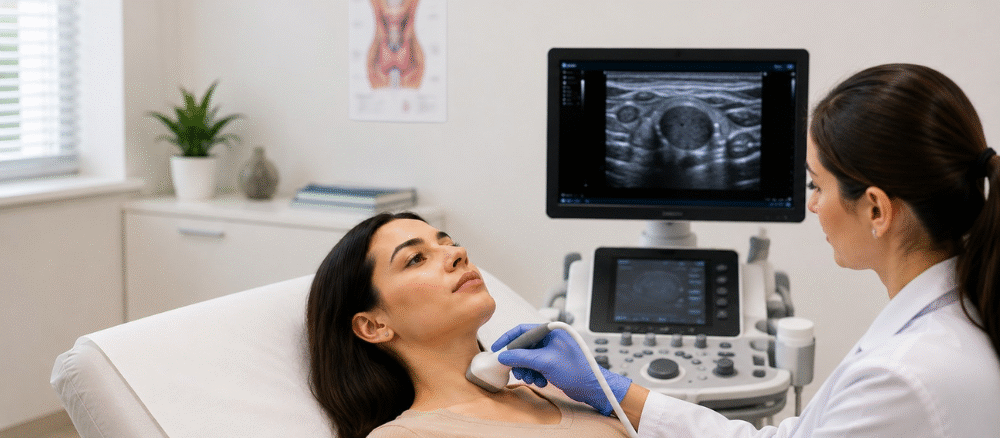
Finding a lump in your neck or being told that you have a thyroid nodule after an ultrasound can be worrying. However, it is important to know that most thyroid nodules are benign (non-cancerous) and do not require immediate surgery. The key is timely evaluation, accurate diagnosis, and appropriate follow-up to determine whether the nodule needs observation or treatment.
This article explains what thyroid nodules are, their causes, symptoms, diagnosis, warning signs, and when you should consult a surgical oncologist.
What Are Thyroid Nodules?
A thyroid nodule is an abnormal growth or lump that develops within the thyroid gland, a butterfly-shaped gland located at the front of the neck. The thyroid produces hormones that regulate metabolism, heart rate, body temperature, and energy levels.
Thyroid nodules may be:
- Solid
- Fluid-filled (cystic)
- Mixed solid and cystic
Most nodules are harmless, but a small percentage may represent thyroid cancer. This is why every thyroid nodule should be evaluated by a specialist instead of being ignored.
How Common Are Thyroid Nodules?
Thyroid nodules are quite common, especially in:
- Women
- Adults over 40 years of age
- People with iodine deficiency
- Individuals with a family history of thyroid disease
Many nodules are discovered incidentally during an ultrasound, CT scan, or MRI performed for unrelated medical reasons.
What Causes Thyroid Nodules?
Several conditions can lead to thyroid nodules, including:
- Benign thyroid adenomas
- Thyroid cysts
- Multinodular goiter
- Chronic thyroid inflammation (Hashimoto’s thyroiditis)
- Iodine deficiency
- Genetic predisposition
- Thyroid cancer (less common)
Although cancer is a possibility, approximately 90–95% of thyroid nodules are benign, making proper evaluation essential before drawing conclusions.
Symptoms of Thyroid Nodules
Small thyroid nodules often cause no symptoms and are detected during routine health examinations.
Larger nodules may cause:
- A visible lump in the front of the neck
- Difficulty swallowing
- Difficulty breathing when lying down
- Persistent hoarseness
- Neck discomfort or pressure
- Enlarged lymph nodes
If the nodule produces excess thyroid hormone, patients may also experience:
- Weight loss
- Increased sweating
- Palpitations
- Tremors
- Anxiety
- Heat intolerance
When Should You Be Concerned?
Although most thyroid nodules are benign, certain features require prompt medical evaluation.
You should consult a specialist if you notice:
- A rapidly growing neck lump
- Persistent hoarseness lasting more than two weeks
- Difficulty swallowing or breathing
- Hard or fixed thyroid swelling
- Enlarged lymph nodes in the neck
- A history of radiation exposure to the head or neck
- A family history of thyroid cancer or inherited endocrine disorders
These signs do not necessarily indicate cancer, but they warrant further investigation.
How Are Thyroid Nodules Diagnosed?
An accurate diagnosis usually involves several steps.
-
Clinical Examination
Your doctor will examine the thyroid gland and check for enlarged lymph nodes.
-
Blood Tests
Thyroid function tests, especially TSH levels, help determine whether the thyroid is functioning normally.
-
Thyroid Ultrasound
Ultrasound is the most important imaging test for thyroid nodules. It evaluates:
- Nodule size
- Shape
- Borders
- Blood supply
- Presence of calcifications
- Suspicious ultrasound features
-
Fine Needle Aspiration Cytology (FNAC)
If a nodule appears suspicious or reaches a certain size, your doctor may recommend a fine needle aspiration biopsy. This minimally invasive procedure collects cells from the nodule to determine whether it is benign or malignant.
-
Additional Tests
Depending on the findings, your doctor may recommend:
- CT or MRI scans
- Radioactive iodine scan
- Molecular testing in selected cases
Can Every Thyroid Nodule Become Cancer?
No.
The vast majority of thyroid nodules remain benign throughout life. Only a small proportion are diagnosed as thyroid cancer after detailed evaluation.
Even when thyroid cancer is detected, many types—particularly papillary thyroid cancer—have an excellent prognosis when diagnosed early and treated appropriately.
Treatment Options for Thyroid Nodules
Treatment depends on the nature of the nodule.
Observation
Small benign nodules without symptoms may simply require periodic ultrasound monitoring.
Medication
Certain thyroid disorders causing hormone imbalance may require medical treatment.
Surgery
Surgery may be recommended if:
- Cancer is confirmed
- Cancer is strongly suspected
- The nodule is very large
- It causes swallowing or breathing difficulties
- Cosmetic concerns are significant
- The nodule continues to grow during follow-up
Radioactive Iodine Therapy
In selected patients, radioactive iodine may be recommended after surgery, particularly for certain types of differentiated thyroid cancer.
Can Thyroid Cancer Be Treated Successfully?
Yes.
Most thyroid cancers, especially papillary and follicular thyroid cancers, have excellent treatment outcomes when detected early. Modern surgical techniques, accurate pathology, and individualized follow-up have significantly improved long-term survival and quality of life.
Early diagnosis remains the most important factor for successful treatment.
Why Choosing an Experienced Surgical Oncologist Matters
The management of thyroid nodules and thyroid cancer requires expertise in diagnosis, surgery, pathology interpretation, and long-term follow-up. Complex thyroid surgeries should be performed by experienced surgical oncologists to minimize complications and achieve optimal outcomes.
Dr. Seema Singh is a Consultant Surgical Oncologist with over 14 years of experience and currently serves as the Associate Director – Surgical Oncology & Robotic Oncosurgery (Breast & Gynae Unit) at Max Institute of Cancer Care, Vaishali. She has trained at AIIMS New Delhi, previously served at Rajiv Gandhi Cancer Institute, Yashoda Super Speciality Hospitals, and Max Healthcare, and has extensive experience in managing thyroid cancer using advanced surgical and robotic techniques. She is also a member of leading professional surgical oncology associations, reflecting her commitment to evidence-based, patient-centric cancer care.
Conclusion
Most thyroid nodules are not cancerous, but they should never be ignored. A comprehensive evaluation—including clinical examination, thyroid ultrasound, and, when indicated, FNAC—helps determine whether a nodule requires observation or treatment. Early diagnosis provides the best opportunity for successful management while avoiding unnecessary procedures.
If you notice a thyroid lump or have been diagnosed with a thyroid nodule, consulting an experienced Thyroid cancer specialist can help ensure an accurate diagnosis and a personalized treatment plan. Early evaluation not only provides peace of mind but also improves outcomes if treatment is required.
Frequently Asked Questions (FAQs)
-
Are all thyroid nodules cancerous?
No. Around 90–95% of thyroid nodules are benign and do not represent thyroid cancer.
-
Do all thyroid nodules require surgery?
No. Surgery is recommended only when cancer is confirmed or suspected, when the nodule causes symptoms, or when it continues to grow.
-
Is a thyroid biopsy painful?
Fine Needle Aspiration Cytology (FNAC) is a minimally invasive procedure that usually causes only mild discomfort and is completed within a few minutes.
-
Can thyroid nodules disappear on their own?
Some cystic nodules may shrink over time, but many remain stable. Regular follow-up is important to monitor for changes.
-
What is the best test for evaluating a thyroid nodule?
A thyroid ultrasound combined with FNAC (when indicated) is considered the standard approach for evaluating thyroid nodules.
-
Can thyroid cancer be cured?
Yes. Most thyroid cancers have an excellent prognosis when diagnosed early and treated appropriately with surgery and, in selected cases, radioactive iodine therapy.
-
When should I consult a specialist for a thyroid nodule?
You should seek medical advice if you notice a new neck lump, rapid enlargement of a thyroid swelling, persistent hoarseness, difficulty swallowing or breathing, or if imaging shows suspicious features. Consulting the Best Thyroid cancer doctor in Vaishali ensures timely diagnosis, appropriate treatment planning, and comprehensive follow-up care.
Leave feedback about this