

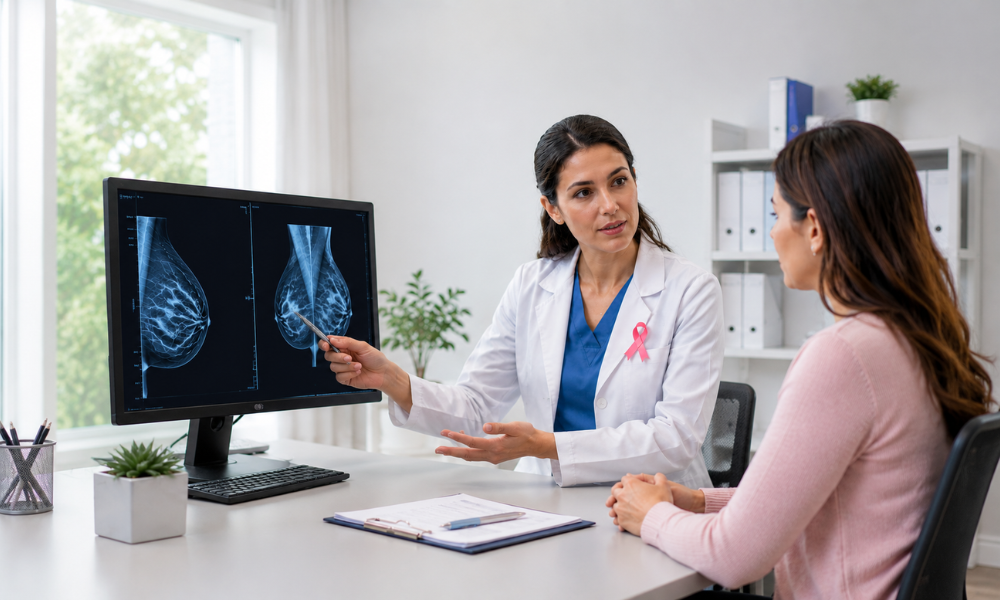
A breast cancer diagnosis often raises many questions, and one of the first is, “What stage is my cancer?” The stage is more than just a medical term—it helps doctors understand the extent of the disease and guides every major treatment decision. From selecting the right type of surgery to determining whether chemotherapy, radiation therapy, targeted therapy, or hormone therapy is needed, staging provides a clear roadmap for personalized care.
Today, breast cancer treatment is no longer based only on the size of a lump. Specialists evaluate imaging results, biopsy findings, lymph node involvement, and tumour biology to create an individualized treatment strategy. Understanding breast cancer staging can help patients feel more informed and confident before beginning treatment.
Why Is Breast Cancer Staging Performed?
Before recommending any treatment, doctors need to know how far the disease has progressed. Staging provides this information by assessing the tumour and determining whether cancer has spread beyond its original location.
The information gathered during staging helps doctors:
- Select the most effective treatment plan.
- Decide whether surgery should be the first step.
- Determine if chemotherapy is required before surgery.
- Estimate the likely outcome of treatment.
- Plan long-term follow-up and monitoring.
Every patient is unique, so accurate staging ensures that treatment is tailored to individual needs rather than using a one-size-fits-all approach.
How Is the Stage Determined?
Breast cancer staging is based on information collected from several diagnostic tests rather than a single examination.
Your doctor may recommend:
- Clinical breast examination
- Digital mammography
- Breast ultrasound
- MRI when additional detail is required
- Needle biopsy to confirm the diagnosis
- Blood investigations
- PET-CT, CT scan, or bone scan if there is concern that the disease has spread
Each investigation contributes valuable information that helps specialists understand the complete picture before treatment begins.
Understanding the TNM Classification
Doctors across the world commonly describe breast cancer using the TNM classification. Instead of assigning a stage immediately, they first evaluate three important features of the disease.
T represents the characteristics of the original tumour, including how large it has grown and whether it has extended into nearby tissues.
N indicates whether cancer cells have travelled to lymph nodes located around the breast or under the arm.
M identifies whether cancer has spread to organs located away from the breast, such as the lungs, liver, bones, or brain.
After considering all three components together, doctors assign an overall stage from Stage 0 to Stage IV.
Stage 0: The Earliest Form
Stage 0 is considered the earliest form of breast cancer. At this point, abnormal cells are limited to the milk ducts and have not entered the surrounding breast tissue.
Because the disease is detected before becoming invasive, treatment is usually highly successful. Depending on the individual case, treatment may involve breast-conserving surgery, radiation therapy, and in some situations, hormone therapy to reduce the risk of recurrence.
Stage I: Early Invasive Breast Cancer
In Stage I, cancer has started invading breast tissue but remains relatively small. Some patients may have no lymph node involvement, while others may have only minimal spread to nearby nodes.
Treatment often focuses on completely removing the tumour while preserving as much healthy breast tissue as possible whenever appropriate. Surgery is frequently combined with radiation therapy, hormone therapy, targeted therapy, chemotherapy, or a combination of these depending on laboratory findings.
Stage II: Cancer Has Progressed Further
Stage II indicates that the tumour has become larger or has spread to a small number of nearby lymph nodes. Although the disease is more advanced than Stage I, it is still considered potentially curable with comprehensive treatment.
Many patients receive a combination of surgery and systemic therapies. In certain situations, medicines are given before surgery to shrink the tumour, making the operation safer and increasing the possibility of breast conservation.
Stage III: Locally Advanced Breast Cancer
Stage III means the disease has spread more extensively within the breast or surrounding lymph nodes but has not reached distant organs.
Treatment generally requires a multidisciplinary approach. Doctors often begin with chemotherapy or targeted medicines to reduce the size of the cancer before surgery. Once surgery has been completed, radiation therapy and additional medications may be recommended to lower the chance of recurrence.
Although treatment may be more intensive, significant advances in cancer care have improved outcomes for many patients with Stage III disease.
Stage IV: When Cancer Has Spread Beyond the Breast
Stage IV breast cancer means cancer cells have spread to distant parts of the body. The bones, lungs, liver, and brain are among the most common sites where this can occur.
While metastatic breast cancer is usually managed as a long-term condition rather than cured completely, modern treatment options have transformed patient care. Targeted therapy, immunotherapy, hormone therapy, chemotherapy, and supportive care can help control disease progression, relieve symptoms, and improve quality of life for many years.
Staging Is Only One Part of Treatment Planning
Two patients with the same stage of breast cancer may not receive identical treatment. This is because specialists also study the biological characteristics of the tumour.
Important factors include:
- Hormone receptor status (ER and PR)
- HER2 expression
- Tumour grade
- Ki-67 proliferation index
- Genetic mutations, including BRCA1 and BRCA2
- Patient’s age, overall health, and personal preferences
Considering all these factors allows doctors to recommend treatment that is truly personalized.
Can the Stage Be Updated Later?
The stage estimated before treatment is known as the clinical stage. After surgery, the removed tissue is carefully examined under a microscope, providing additional information about the tumour and lymph nodes. This detailed assessment may refine the original stage and helps guide any additional treatment required after surgery.
If breast cancer returns after successful treatment or appears in another part of the body, it is managed as recurrent or metastatic disease rather than simply assigning a different stage.
Why Specialist Surgical Care Matters
Successful breast cancer treatment depends on the expertise of an experienced multidisciplinary team. Surgeons, medical oncologists, radiation oncologists, radiologists, and pathologists work together to ensure every patient receives evidence-based care.
Dr. Seema Singh is an accomplished Surgical Oncologist with advanced training in cancer surgery, including MCh in Surgical Oncology from AIIMS, New Delhi, and specialized expertise in minimally invasive and robotic cancer surgery. Her approach emphasizes precise diagnosis, individualized treatment planning, evidence-based surgical techniques, and compassionate patient care. Every treatment recommendation is made after carefully reviewing clinical findings, imaging results, pathology reports, and the patient’s overall health.
If you are searching for the BEST SURGICAL CANCER DOCTOR IN GHAZIABAD, choosing an experienced surgical oncologist can make a significant difference in ensuring accurate staging and appropriate treatment planning.
Conclusion
Understanding breast cancer staging helps patients appreciate why treatment recommendations may differ from one individual to another. The stage reflects how extensively the disease has developed and provides the foundation for selecting the most suitable treatment strategy. However, modern cancer care also considers tumour biology, genetic markers, and the patient’s overall health before making any treatment decisions.
Early diagnosis, timely evaluation, and expert multidisciplinary care continue to improve survival rates and quality of life for women diagnosed with breast cancer. If you are looking for advanced, personalized cancer treatment from the BEST ROBOTIC CANCER SURGEON IN GHAZIABAD, consulting a qualified surgical oncologist early can help you receive the right treatment at the right time with confidence.
Leave feedback about this